Nobel Prize 2026: A Complete Guide for Students, Teachers, and Curious Minds
The 2026 Nobel Prizes have been announced. From a physicist who spent decades catching ghost-like particles in Antarctic ice, to a chemist who solved a century-old puzzle about molecular mirrors, to survivors of atomic bombs who have dedicated their lives to ensuring nuclear weapons are never used again—this year's laureates offer lessons that go far beyond their specific fields.
This guide is written for students, teachers, parents, and anyone who wants to understand what the 2026 Nobel Prizes are about. We will explain the science in plain language, share the stories behind the discoveries, and explore why these achievements matter for all of us.
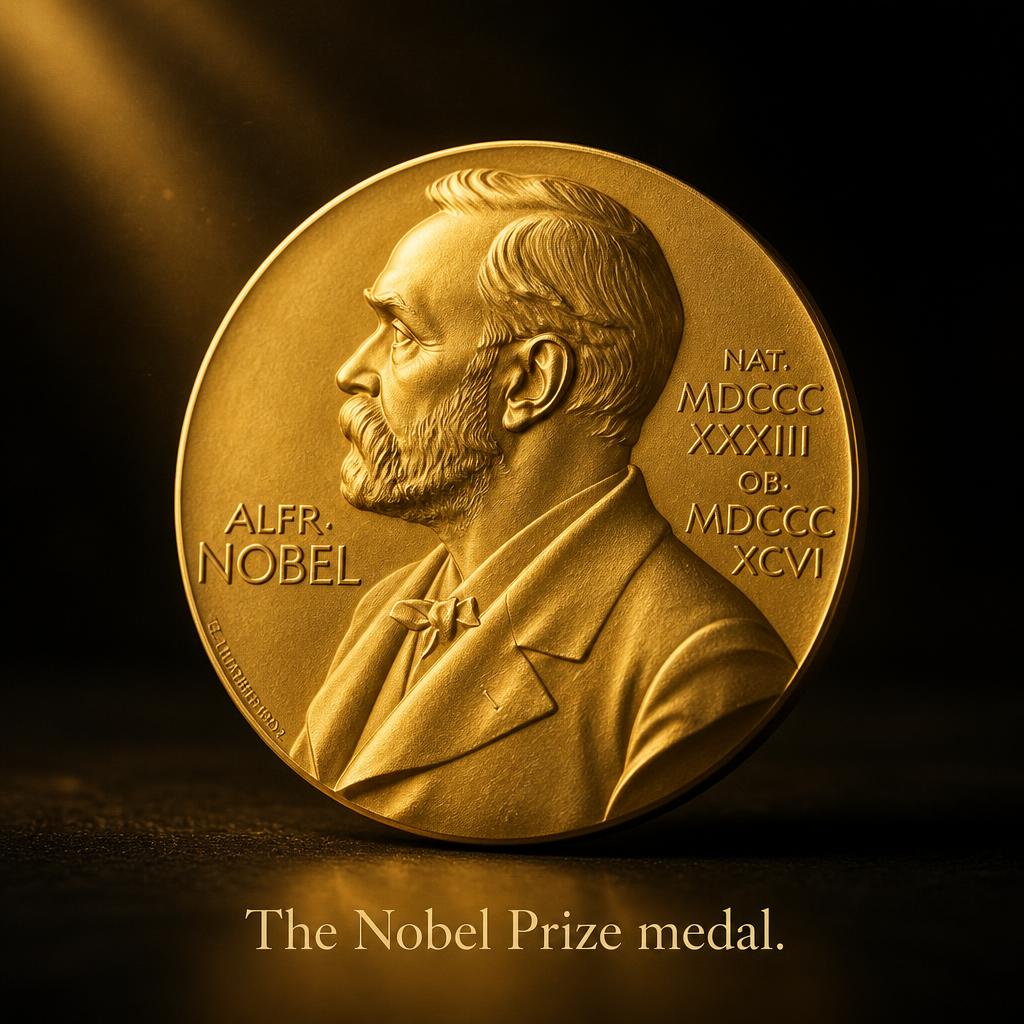
Nobel Prize 2026 at a Glance
Here is a quick overview of all six categories and their winners:
|
Category |
Winner(s) |
Country/Institution |
Main Contribution |
|
Physics |
Francis Halzen |
Belgium / University of Wisconsin–Madison |
Decisive contributions to the IceCube Neutrino Observatory and discovery of high-energy neutrinos of astrophysical origin |
|
Chemistry |
Henri B. Kagan, Kenso Soai |
France / Université Paris-Sud; Japan / Tokyo University of Science |
Discovery of non-linear effects and autocatalysis in asymmetric organic synthesis |
|
Physiology or Medicine |
Karl Deisseroth, Peter Hegemann, Georg Nagel |
USA / Stanford University; Germany / Humboldt University Berlin; Germany / University of Würzburg |
Discoveries concerning light-gated ion channels and optogenetics |
|
Literature |
László Krasznahorkai |
Hungary |
Compelling and visionary oeuvre that, in the midst of apocalyptic terror, reaffirms the power of art |
|
Peace |
Nihon Hidankyo |
Japan |
Efforts to achieve a world free of nuclear weapons and demonstrating through witness testimony that nuclear weapons must never be used again |
|
Economic Sciences |
Claudia Goldin |
USA / Harvard University |
Advanced understanding of women's labor market outcomes |
Nobel Prize in Physics 2026: Catching Ghosts in Antarctic Ice
The Winner

The 2026 Nobel Prize in Physics was awarded to Francis Halzen, an 82-year-old Belgian-born physicist currently at the University of Wisconsin–Madison . The Royal Swedish Academy of Sciences honored him "for decisive contributions to the IceCube Neutrino Observatory and the discovery of high-energy neutrinos of astrophysical origin" .
What Are Neutrinos?
Imagine a particle so shy that it can pass through the entire Earth without noticing. That's a neutrino. These subatomic particles have almost no mass and interact so weakly with matter that trillions of them stream through your body every second—and you feel absolutely nothing.
This ghost-like quality is exactly what makes neutrinos scientifically valuable. Because they barely interact with anything, they can travel from the most violent and distant corners of the universe—colliding black holes, exploding stars, supermassive black holes at galactic centers—and reach us unchanged. They carry information that no other messenger, including light, can deliver.
The Wild Idea That Worked
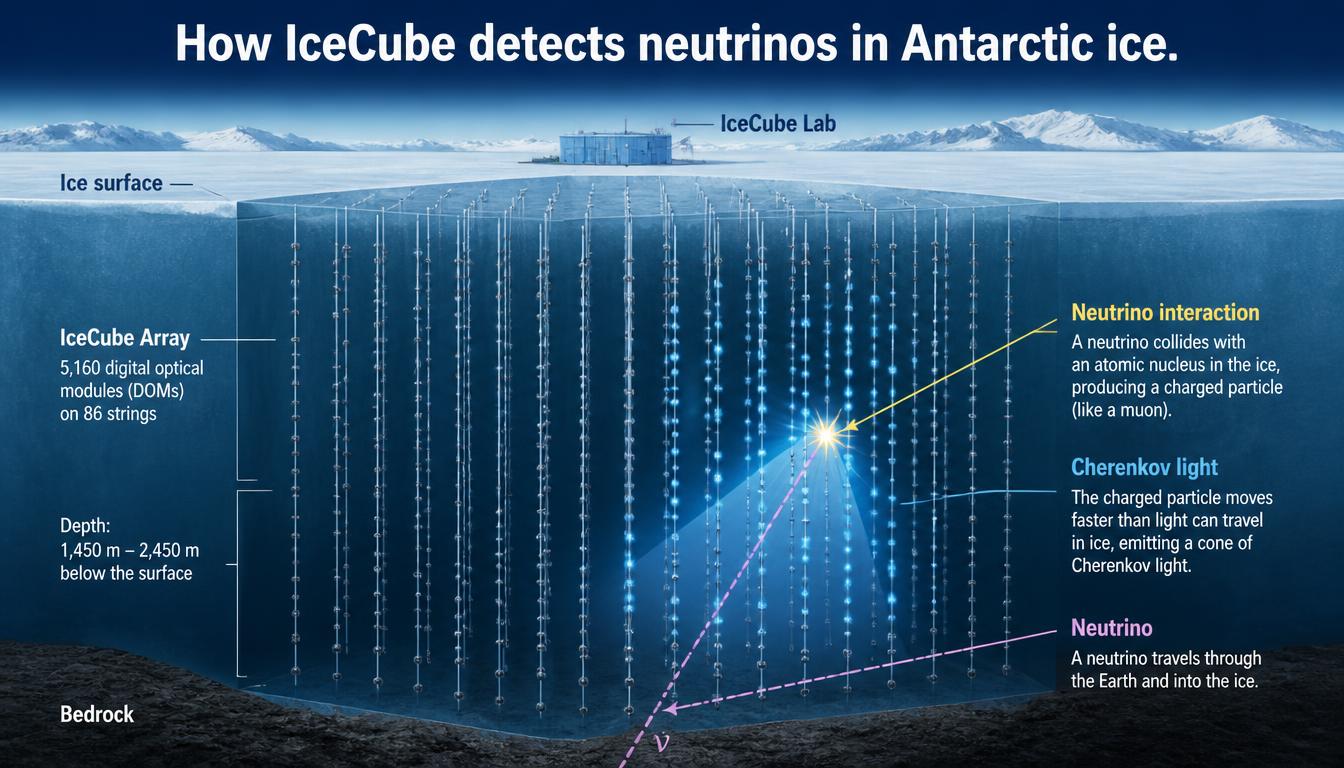
In 1988, Halzen proposed something that sounded almost absurd: use a cubic kilometer of Antarctic ice as a neutrino detector .
The logic was sound, even if the scale was daunting. Ice is transparent, stable, and free from the radioactive interference that plagues detectors on land. If you could bury enough light sensors deep in the ice, you might catch the rare flash of light that occurs when a neutrino—by sheer chance—collides with an atom.
It took over two decades of international collaboration. The IceCube Neutrino Observatory was completed in 2011, deploying thousands of optical sensors across a cubic kilometer of Antarctic ice . In 2013, it detected high-energy neutrinos from outside our solar system. This marked the birth of neutrino astronomy—a completely new way of observing the universe.
Mark Pearce, chair of the Nobel Committee for Physics, said Halzen "led an international scientific and engineering team that designed and built this important observatory. His tenacity and scientific vision paved the way for a new kind of astronomy" .
Why Students Should Care
Halzen's story is about patience and conviction. He pursued an idea for more than thirty years before it produced definitive results. The lesson isn't just about neutrinos—it's that big scientific breakthroughs often require long-term commitment to ideas that seem risky or impractical at first.
Nobel Prize in Chemistry 2026: The Mystery of Molecular Mirrors
The Winners
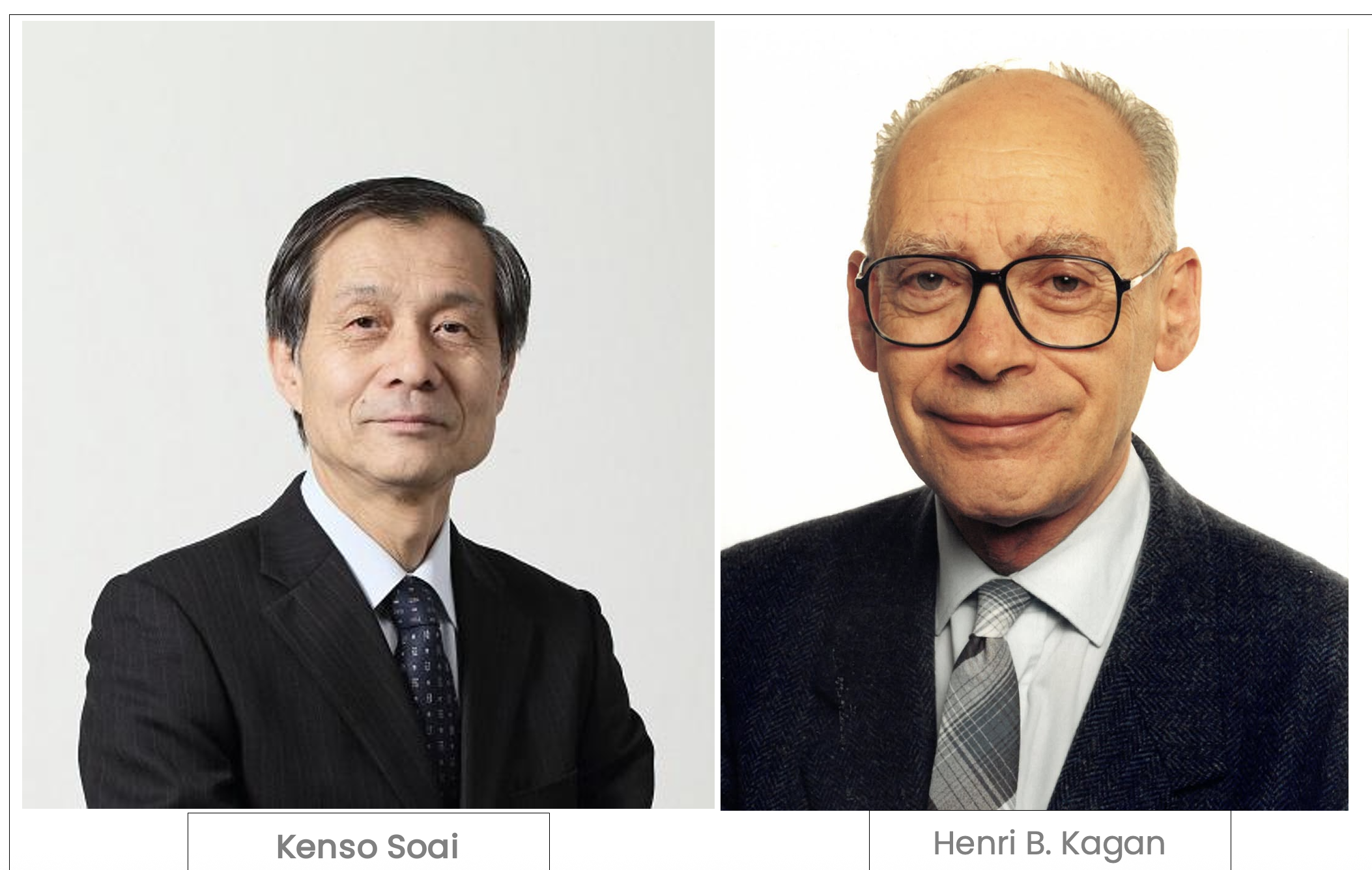
The 2026 Nobel Prize in Chemistry was awarded to Henri B. Kagan (95, Université Paris-Sud) and Kenso Soai (Tokyo University of Science) for their discovery of non-linear effects and autocatalysis in asymmetric organic synthesis .
The Handedness Problem
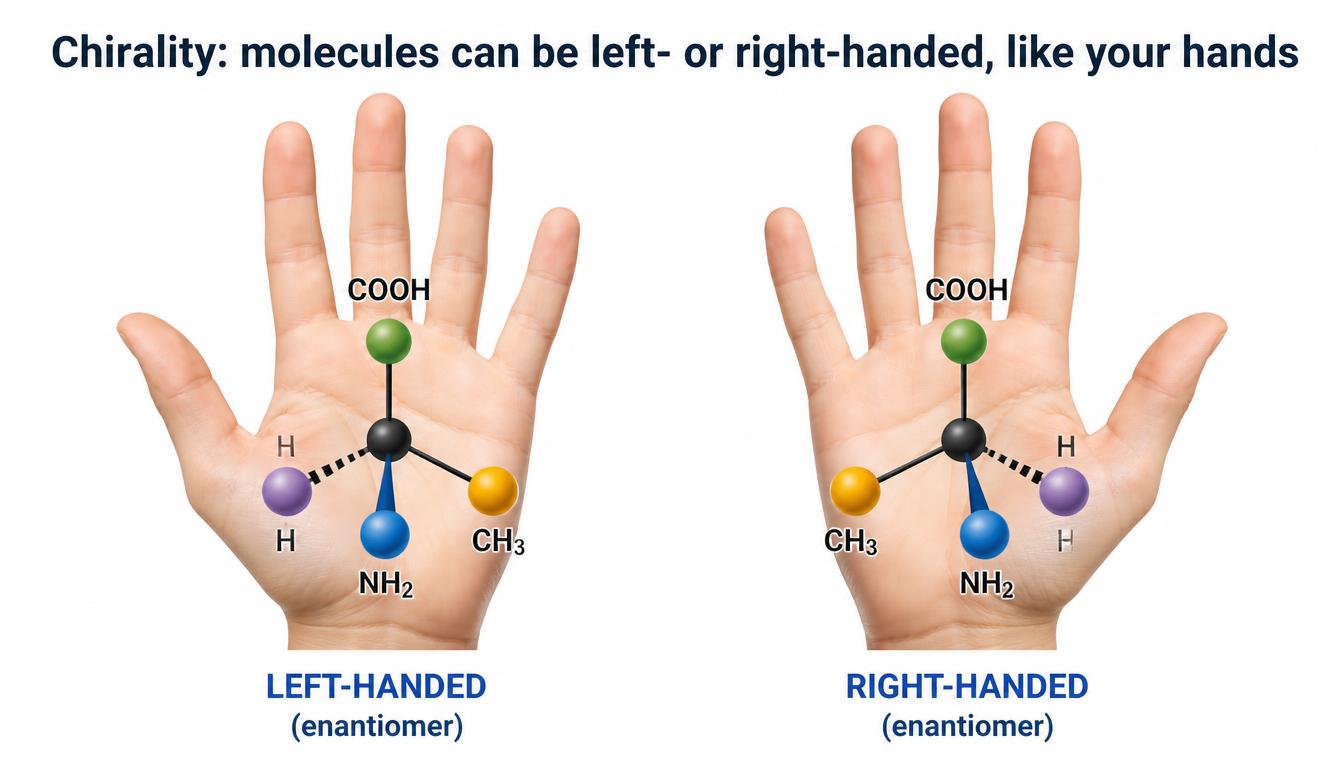
Hold up your left and right hands. They are mirror images—similar but not identical. You cannot perfectly overlay one on the other, no matter how you rotate them.
Many molecules work the same way. They come in two forms, called "left-handed" and "right-handed." This property is called chirality, from the Greek word for hand.
This matters enormously for medicine. One version of a drug molecule might cure a disease, while its mirror image might be useless or even harmful. For decades, chemists struggled to produce only the useful version—a challenge known as asymmetric synthesis.
What Kagan and Soai Discovered
Kagan discovered in the 1980s that certain chemical reactions can amplify a small preference for one handedness, making the "wrong" version gradually disappear. This phenomenon is called a non-linear effect—a small initial imbalance can produce a much larger final imbalance.
Soai went further. He designed a reaction that could start with a tiny, almost imperceptible imbalance and end up producing essentially a single-handed product. This is autocatalysis: the reaction products themselves accelerate the reaction, favoring one handedness over the other .
Why This Connects to Life Itself
Here's the fascinating part: life on Earth is "homochiral." The amino acids in your body are almost all left-handed, while sugars are right-handed. Why?
One leading theory is that early chemical reactions—like the ones Soai discovered—amplified tiny random imbalances until one handedness dominated. Understanding this could help explain how life's chemistry began.
Why Students Should Care
The chemistry prize shows how a seemingly abstract question—"why do molecules have handedness?"—can lead to practical tools for making safer, more effective medicines. It also demonstrates that fundamental research, pursued for curiosity, often has unexpected practical value.
Nobel Prize in Physiology or Medicine 2026: Controlling the Brain with Light
The Winners
The 2026 Nobel Prize in Physiology or Medicine was awarded to Karl Deisseroth (Stanford University), Peter Hegemann (Humboldt University Berlin), and Georg Nagel (University of Würzburg) for their discoveries concerning light-gated ion channels and optogenetics .
The Problem: How Do You Study a Living Brain?
The brain contains roughly 86 billion neurons, all communicating through electrical and chemical signals. To understand how memories form, how fear works, or what goes wrong in diseases like Parkinson's, scientists need to control specific neurons in living animals. Traditional methods were too slow, too imprecise, or too invasive.
The Discovery: Borrowing from Algae
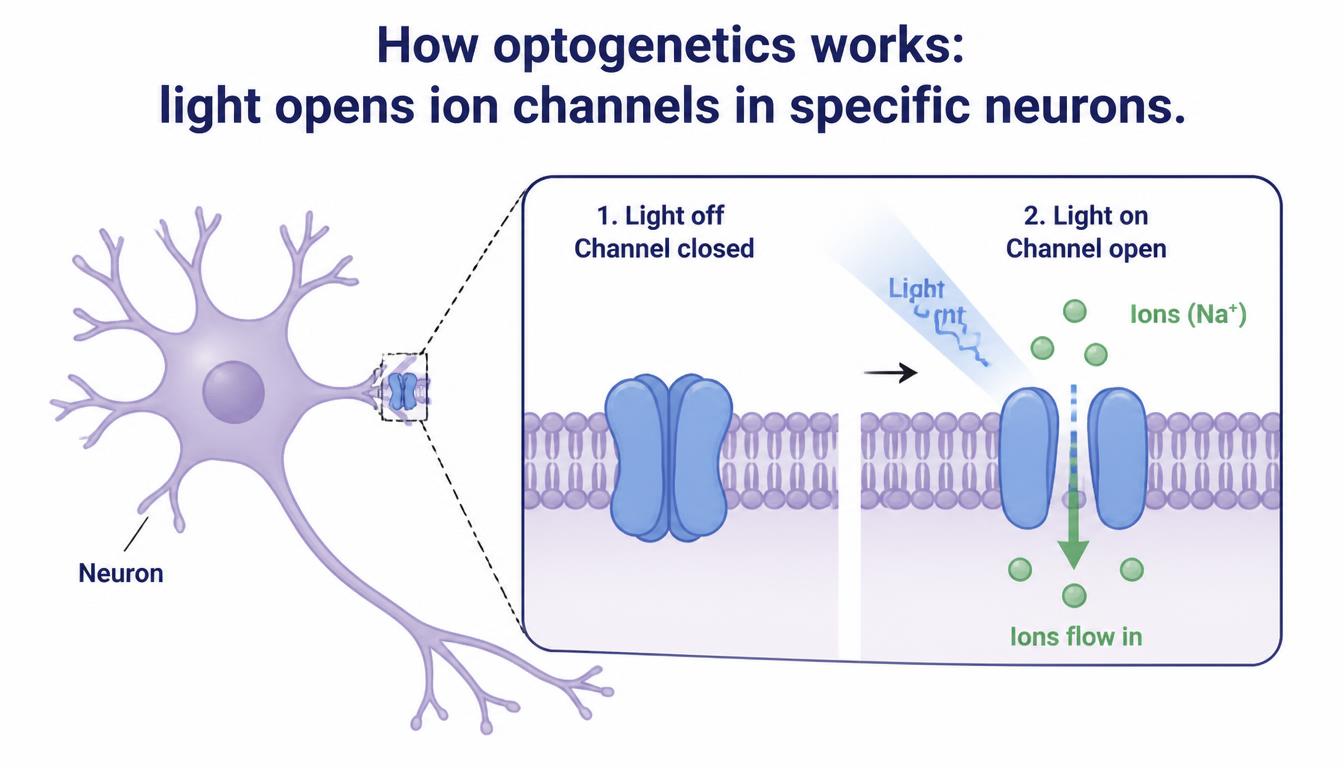
Hegemann and Nagel were studying a single-celled alga called Chlamydomonas, which swims toward light. They identified the protein that lets the alga sense light—a "light-gated ion channel" that opens when struck by light, allowing ions to flow into the cell.
Deisseroth's insight was to take this gene and insert it into specific neurons in animals. The result: neurons that can be switched on with a pulse of light. This gave researchers a precise remote control for brain circuits—a technique now known as optogenetics .
What This Means for Medicine
Optogenetics is now used in laboratories worldwide to study everything from addiction to Parkinson's disease to depression. While it hasn't yet become a standard human therapy, it has fundamentally changed how neuroscientists ask questions. As the Nobel Committee noted, the method makes it possible to "switch on, or off, the activity of individual nerve cells in a living brain" .
A Simple Analogy
Think of the brain as a massive electrical grid with billions of switches. Before optogenetics, scientists could only flip the main breaker—affecting huge regions of the brain at once. Optogenetics gave them the ability to flip individual switches with a beam of light. This precision is transforming our understanding of how the brain works.
Nobel Prize in Literature 2026: The Master of Apocalyptic Vision
The Winner
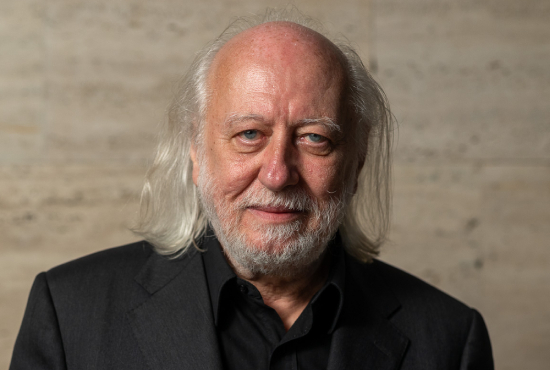
The 2026 Nobel Prize in Literature was awarded to László Krasznahorkai, a 71-year-old Hungarian author often described as his country's most important living writer . The Swedish Academy honored him "for his compelling and visionary oeuvre that, in the midst of apocalyptic terror, reaffirms the power of art" .
Who Is Krasznahorkai?
Born in Gyula, Hungary, Krasznahorkai grew up in a middle-class Jewish family and came of age under communism . His first novel, Satantango (1985), was a literary sensation in Hungary and remains his best-known work. It was later adapted into a seven-hour film by director Béla Tarr.
American critic Susan Sontag called him the "master of the apocalypse" after reading his second book, The Melancholy of Resistance .
What Makes His Writing Distinctive?
Krasznahorkai is famous for long, winding sentences that often stretch for pages without full stops. His style has been described by the author himself as "reality examined to the point of madness" .
His themes are dark—dystopia, melancholy, the fragility of social order—but the Academy noted that his work also contains "lightness of touch and a great lyrical beauty" . The Academy compared him to "a great epic writer in the Central European tradition that extends through Kafka to Thomas Bernhard" .
He is the second Hungarian to win the Literature Nobel, following Imre Kertész in 2002.
Key Works
- Satantango (1985): A bleak, comic novel about a failing collective farm and the arrival of a mysterious figure who may or may not be a savior.
- The Melancholy of Resistance (1989): A small Hungarian town is thrown into chaos by the arrival of a circus featuring a stuffed whale.
- War and War (1999): A Hungarian archivist discovers a manuscript and becomes obsessed with it.
Why the Committee Recognized Him
The Academy cited Krasznahorkai's "unwavering belief in the power of art" despite his dark subject matter . His work doesn't offer easy comfort, but it insists that art and literature remain essential even—especially—in times of crisis.
Nobel Peace Prize 2026: The Witnesses Who Keep the Nuclear Taboo Alive
The Winner
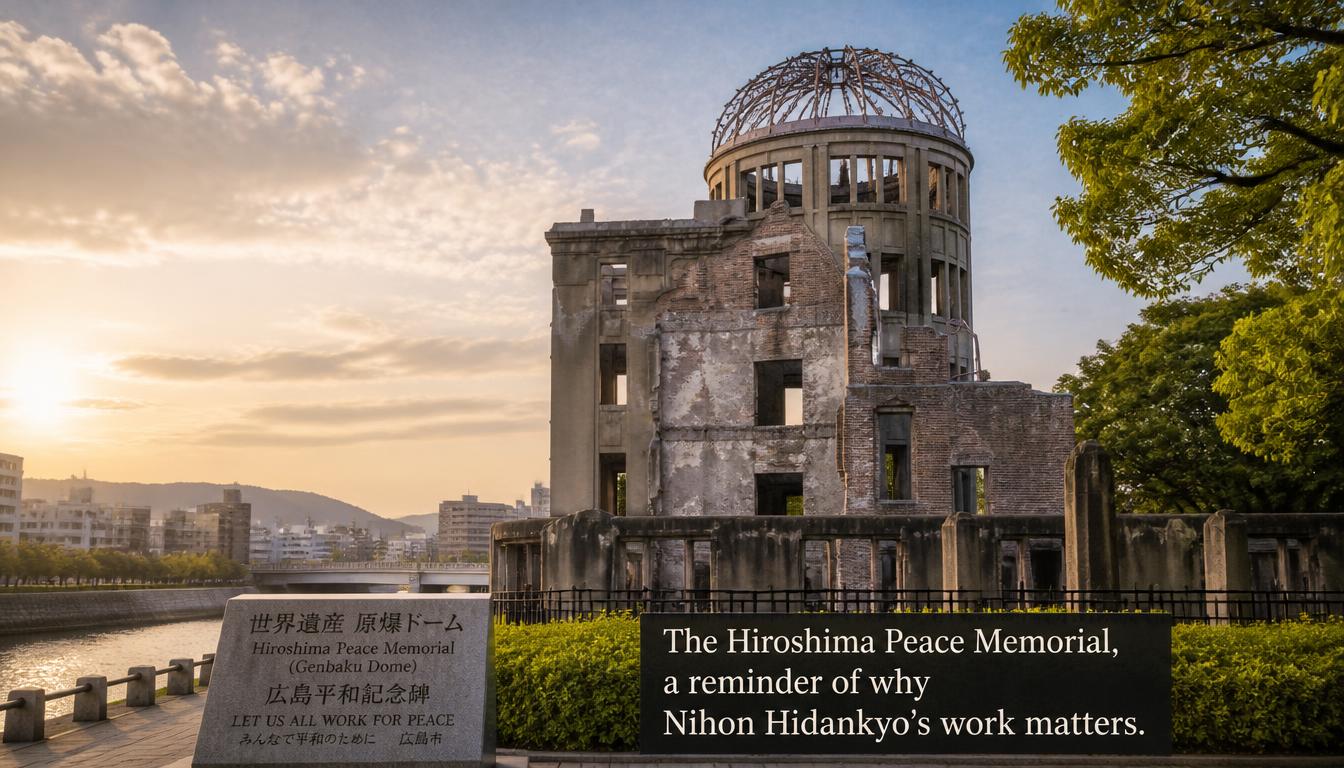
The 2026 Nobel Peace Prize was awarded to Nihon Hidankyo, a Japanese grassroots organization of atomic bomb survivors from Hiroshima and Nagasaki. These survivors are known as Hibakusha.
What Is Nihon Hidankyo?
Founded in 1956, Nihon Hidankyo represents survivors who experienced the only wartime use of nuclear weapons in history. Their mission is simple but urgent: ensure that nuclear weapons are never used again.
The Norwegian Nobel Committee explained its decision by noting that "one day, the survivors of the atomic bombs will no longer be among us as witnesses to history" . The organization received the honor "for its efforts to achieve a world free of nuclear weapons and for demonstrating through witness testimony that nuclear weapons must never be used again" .
Why This Matters Now
Nihon Hidankyo has spent decades sharing personal testimonies of nuclear devastation. They have worked to educate new generations in Japan and around the world. By keeping the memory alive, they help maintain the "nuclear taboo"—the widespread international norm against using nuclear weapons.
The Committee described this taboo as "an indispensable condition for a peaceful future for humanity" .
The Problem They Address
The threat of nuclear weapons has not disappeared. Nine countries possess nuclear arsenals. Tensions between nuclear-armed states remain high. As the surviving witnesses grow older—most are now in their 80s and 90s—their firsthand testimony becomes increasingly precious.
Why Their Work Matters
Nihon Hidankyo's power comes from personal witness. Statistics and policy papers can be abstract. But hearing someone describe what happened on August 6, 1945, in Hiroshima—in their own words—makes the unthinkable real.
Their work is a reminder that nuclear weapons are not just a political issue. They are a human issue.
Nobel Prize in Economic Sciences 2026: Understanding Women in the Workforce
The Winner
The 2026 Prize in Economic Sciences was awarded to Claudia Goldin, a Harvard University professor, "for having advanced our understanding of women's labor market outcomes" .
What Did She Study?
Goldin's research provides the first comprehensive historical account of women's participation in the labor market and their earnings over the past two centuries. She uncovered key reasons why the gender gap exists and why it has been so persistent.
The Nobel Committee noted that globally, about 50 percent of women participate in the labor market compared to 80 percent of men. Women also earn less and are less likely to reach the top of career ladders .
A Simple Example
Imagine two workers with identical qualifications. One is a man, one is a woman. Historically, the woman might face different expectations about staying home after having children, different access to certain jobs, or subtle discrimination in promotions.
Goldin's work showed how these factors accumulate over time to create persistent gaps—even when individual choices appear free. Her research revealed that the problem isn't just about individual decisions. It's about structural patterns that repeat across generations and countries.
Why This Matters
Understanding the causes of gender gaps is essential for designing effective policies. Goldin's research helps policymakers make better decisions about family leave, childcare, and workplace flexibility.
Goldin is the third woman to win the Economics Prize, following Elinor Ostrom (2009) and Esther Duflo (2019) .

What Connects the 2026 Nobel Prizes?
Several themes run through this year's awards:
Persistence pays off. Halzen worked on IceCube for over thirty years. Kagan's discoveries date back to the 1980s. Goldin built her understanding of labor markets through decades of archival research.
Small observations reveal big truths. Hegemann and Nagel noticed how a tiny alga responds to light. Soai studied reactions that begin with minuscule imbalances. These small-scale observations led to tools and insights with enormous reach.
Fundamental science matters. None of these prizes rewarded an immediate commercial product. They honored curiosity-driven research that, over time, transformed how we see the universe, the brain, molecules, and society.
The human dimension. From Krasznahorkai's literary visions to Nihon Hidankyo's witness testimony, the 2026 prizes remind us that science and art both serve human understanding.
How Nobel Discoveries Affect Our Daily Lives
It's natural to wonder: how do these discoveries connect to everyday life?
Medicine. Optogenetics is already revolutionizing neuroscience research. It may eventually lead to new treatments for brain disorders. Kagan and Soai's chemistry could make drug manufacturing cleaner and safer.
Technology. Neutrino astronomy is opening a new window on the universe. Who knows what we will discover with this new "eye"?
Understanding our world. Goldin's work helps policymakers design better family leave, childcare, and workplace policies by revealing the real causes of gender gaps.
Peace and security. Nihon Hidankyo's testimony reminds us that the nuclear threat has not disappeared. Their work keeps the world's attention on the unthinkable.
Education. All these prizes demonstrate that fundamental research—driven by curiosity—often produces the most transformative results.
10 Interesting Facts About the Nobel Prize
- The prize money comes from Alfred Nobel's fortune. Nobel, the inventor of dynamite, left most of his wealth to fund the prizes. The 2026 prize is 12 million Swedish kronor (about $1.2 million or 8 million RMB) per category .
- The Nobel Peace Prize is awarded in Oslo, not Stockholm. The other prizes are presented in Stockholm, but Nobel specified that the Peace Prize be decided and awarded by a Norwegian committee.
- The Economics Prize is not an original Nobel Prize. It was established in 1968 by Sweden's central bank in memory of Alfred Nobel. That's why it's officially called the "Sveriges Riksbank Prize in Economic Sciences in Memory of Alfred Nobel."
- You cannot nominate yourself. The nomination process is by invitation only for most prizes.
- The prizes have been awarded since 1901. The first ceremony took place five years after Nobel's death in 1896.
- Kagan is 95 years old—one of the oldest laureates ever. Age doesn't stop great science .
- László Krasznahorkai is the second Hungarian to win Literature. Imre Kertész won in 2002 .
- Nihon Hidankyo was founded in 1956. That's 70 years of continuous advocacy .
- The Nobel Prize in Physics 2026 is a solo award. Halzen won alone—relatively rare in modern physics .
- The announcements spanned October 5–12. Medicine kicked things off, and Economics closed the season .
What Students Can Learn from the 2026 Laureates
1. Curiosity beats credentials. Halzen's idea seemed impractical. Goldin studied topics others overlooked. They followed questions that interested them, not just what was fashionable.
2. Persistence is underrated. IceCube took decades. Overnight success is a myth.
3. Small details matter. Hegemann and Nagel studied a single protein in an alga. Soai focused on tiny imbalances. Attention to detail opens doors.
4. Failure is part of the process. No one gets a Nobel by succeeding on the first try. The prize typically rewards work that was questioned, refined, and sometimes rejected before it was celebrated.
5. Science is collaborative. Halzen led an international team. Deisseroth, Hegemann, and Nagel each contributed different pieces. No one does it alone.
6. Communication matters. Nihon Hidankyo's power comes from telling stories. Scientists who can explain their work clearly reach more people.
7. It's never too late. Kagan is 95. Halzen is 82. Their best work didn't happen in their twenties.
Conclusion
The Nobel Prize is more than a medal and a check. It's a reminder that ideas matter. The 2026 laureates didn't chase fame or fortune. They chased questions: What are neutrinos telling us? Why do molecules have handedness? How does the brain work? Why do gender gaps persist? What happens when we forget what nuclear weapons do?
Their answers—some incomplete, some surprising—expanded what we know about the universe, our bodies, our societies, and ourselves.
For students reading this, the lesson isn't that you should try to win a Nobel Prize. It's that the questions you ask today, if you follow them with patience and rigor, might lead somewhere no one expects.
FAQ
What is the Nobel Prize?
The Nobel Prize is an international award given annually for outstanding contributions in Physics, Chemistry, Physiology or Medicine, Literature, and Peace. An associated prize in Economic Sciences was added in 1968. It was established by Alfred Nobel's will in 1895.
Who won the Nobel Prize in Physics 2026?
Francis Halzen, for his contributions to the IceCube Neutrino Observatory and the discovery of high-energy astrophysical neutrinos .
Who won the Nobel Prize in Chemistry 2026?
Henri B. Kagan and Kenso Soai, for their discovery of non-linear effects and autocatalysis in asymmetric organic synthesis .
Who won the Nobel Prize in Medicine 2026?
Karl Deisseroth, Peter Hegemann, and Georg Nagel, for discoveries concerning light-gated ion channels and optogenetics .
Who won the Nobel Peace Prize 2026?
Nihon Hidankyo, the Japanese organization of atomic bomb survivors, for efforts toward a nuclear-weapon-free world .
Who won the Nobel Prize in Literature 2026?
László Krasznahorkai of Hungary, for his compelling and visionary literary work .
Who won the Nobel Prize in Economic Sciences 2026?
Claudia Goldin, for advancing our understanding of women's labor market outcomes .
How are Nobel Prize winners selected?
Thousands of qualified nominators submit candidates. Committees for each prize evaluate nominations and recommend winners. The final decisions are made by the prize-awarding institutions.
How much money does a Nobel laureate receive?
The 2026 prize is 12 million Swedish kronor (roughly $1.2 million or 8 million RMB) per category. If multiple laureates share a prize, they split the amount .
Where is the Nobel Prize awarded?
The Peace Prize is awarded in Oslo, Norway. All other prizes are awarded in Stockholm, Sweden, on December 10—the anniversary of Alfred Nobel's death.