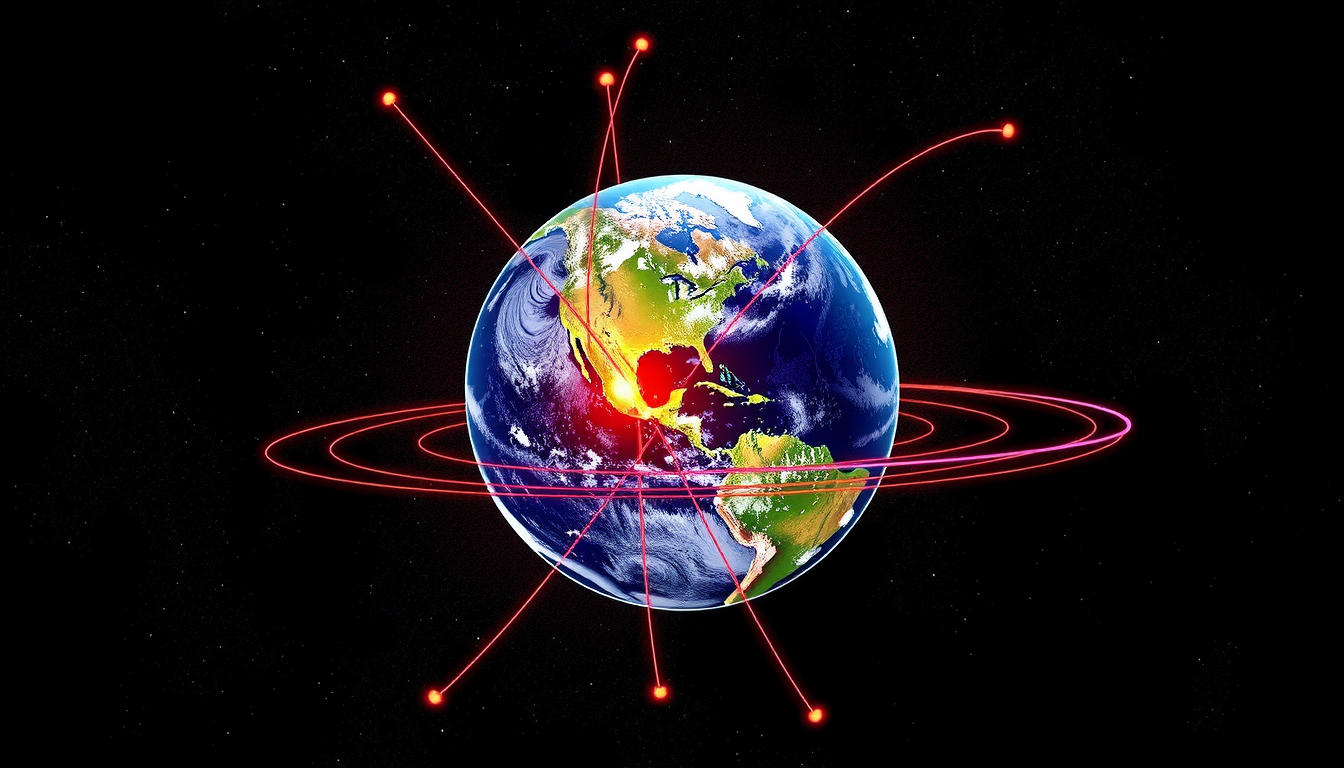
Earth’s Magnetic North Pole is Shifting Toward Russia: A Deep Dive
The Earth’s magnetic field is a critical but often underappreciated component of our planet. Recently, scientists have observed a startling phenomenon: the Earth’s Magnetic North Pole is rapidly shifting toward Russia. This unprecedented movement raises questions about its causes, impacts, and implications for the future.

Introduction
What is the Earth’s Magnetic North Pole?
The Earth’s Magnetic North Pole is the point on the planet where the geomagnetic field points vertically downward. Unlike the Geographic North Pole, which is a fixed location determined by the Earth’s rotational axis, the Magnetic North Pole is dynamic, constantly changing its position due to the fluid nature of the Earth’s core.
For centuries, this magnetic point has been used for navigation, guiding explorers and modern technologies alike. However, its rapid shift in recent decades has brought it under intense scientific scrutiny.
Why is it Moving Toward Russia?
The movement of the Magnetic North Pole toward Siberia is driven by complex changes in the Earth’s molten outer core, where swirling iron currents generate the planet’s magnetic field. Scientists believe that a competition between two magnetic "blobs" deep within the Earth—one under Canada and the other beneath Siberia—has tilted the balance in favor of Russia.
This tug-of-war beneath the surface highlights the dynamic and ever-changing nature of our planet’s interior.
Historical Context of Magnetic Pole Shifts
Magnetic poles have shifted and even reversed many times throughout Earth’s history. Known as geomagnetic reversals, these flips occur every several hundred thousand years. While the current shift toward Russia is not yet a reversal, it underscores the complexity and unpredictability of the Earth’s magnetic dynamics.
Understanding Earth’s Magnetic Field
How is Earth’s Magnetic Field Generated?
The Earth’s magnetic field arises from the dynamo effect in the planet’s outer core. This effect is driven by the movement of molten iron and nickel, creating electrical currents that generate the magnetic field. Think of it as a giant invisible shield, protecting the Earth from harmful cosmic radiation and solar winds.

Role of the Earth’s Core in Magnetic Dynamics
The Earth’s outer core, located about 1,800 miles beneath the surface, is a seething mass of liquid metal. Its flow is influenced by the planet’s rotation, heat from the inner core, and other geological processes. Variations in these flows are thought to be responsible for the shifting Magnetic North Pole.
Importance of the Magnetic Field for Life on Earth
Without the magnetic field, life as we know it might not exist. This invisible force deflects harmful solar radiation, preventing it from stripping away our atmosphere. It also enables technologies like GPS, satellite communication, and even the functioning of compasses.
Recent Observations and Research
Measuring Magnetic North’s Shift: A Timeline
Over the past century, Magnetic North has been on the move. In the early 20th century, it shifted at a slow pace of about 10 miles per year. However, since the 1990s, this movement has accelerated to nearly 30-40 miles annually, signaling dramatic changes in the Earth’s core dynamics.

Key Findings by Scientists
Research reveals that the shift is tied to anomalies in the Earth’s magnetic field, including the weakening of the Canadian magnetic lobe and strengthening of the Siberian counterpart. These findings are reshaping our understanding of geophysics and the forces driving our planet’s magnetic behavior.
The Role of Satellites in Tracking Magnetic Movements
Satellites like the European Space Agency’s Swarm constellation have been instrumental in monitoring the magnetic field. These advanced tools provide detailed data on the strength, direction, and variations of Earth’s magnetic forces, helping scientists map the pole’s trajectory with unprecedented accuracy.